If you are moving sand, gravel, laterite or ore in West Africa, the HOWO 6×4 dump truck is the default choice for one simple reason: every mechanic from Tema to Kano knows how to fix it, and every market stocks the parts. That is worth more than a spec sheet.
This guide covers what a refurbished HOWO tipper actually is, which configuration suits Ghana and Nigeria, how our refit works in Liangshan, and the five things to verify before you release a deposit.
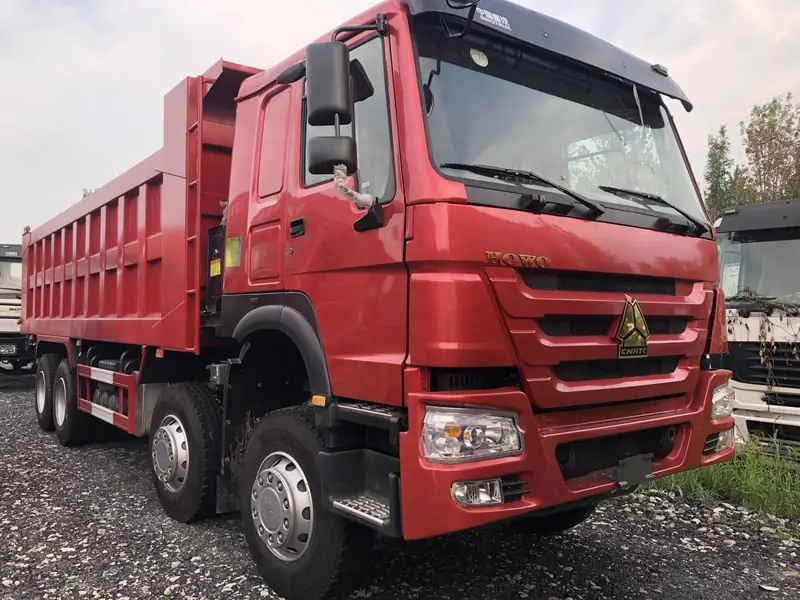
Why the HOWO 6×4 dominates West African haulage
A 6×4 tipper spreads the load across three axles, so it keeps traction on wet laterite and does not tear up its own rear suspension on bad roads. With a 380 HP engine and a 20 m³ body it moves roughly 25–30 tonnes of aggregate per trip — enough to keep a crusher or a block factory fed without needing a fleet of light trucks.
The real advantage is the parts network. WD615-family engines, HW-series gearboxes and standard 12.00R20 tyres are available across Ghana, Nigeria, Kenya and Tanzania. A truck that can be repaired locally is a truck that keeps earning.
Typical configuration we build (all customizable)
| Item | Standard spec | Optional |
|---|---|---|
| Drive type | 6×4 | — |
| Engine power | 380 HP | 420 HP for deeper pits and long gradients |
| Tipper body | 20 m³ | 16 m³ city work / 25 m³ bulk ore |
| Transmission | 10-speed manual | — |
| Cab | Day cab, left-hand drive | Right-hand drive on request for East and Southern Africa |
| Year on documents | 2026 refurbished | — |
| Body steel | Reinforced wear plate | Hardox-type wear liner for rock and ore |
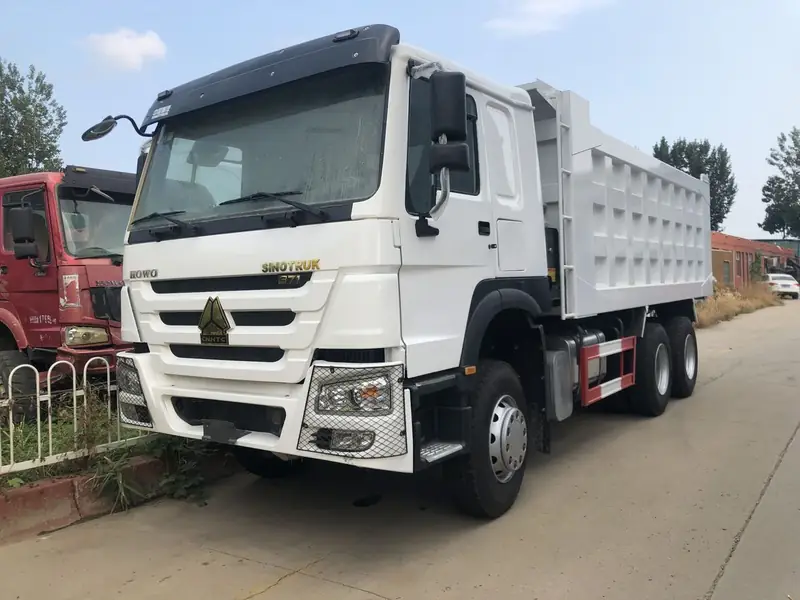
On horsepower: 380 HP is the sweet spot for mixed construction work. If your route includes long loaded gradients or you run fully loaded on soft ground, ask for 420 HP — the fuel penalty is small compared with the lost trips from a truck that cannot climb.
What "refurbished" actually means here
Refurbished is not a cosmetic wash and a new coat of paint. In our Liangshan workshop every unit goes through a fixed sequence before it is released:
- Incoming inspection — engine compression, gearbox and clutch condition, frame cracks, axle play, cab corrosion.
- Engine and drivetrain work — top-end rebuild where needed, injectors and pump serviced, clutch and brakes replaced as required.
- Chassis and body — frame straightened, tipper box rebuilt or replaced, hydraulic ram and PTO tested under load.
- Cab refresh — new seat covers, repaired panels, working lights, wipers, air conditioning checked.
- Load test — loaded road test, tipping cycle test, brake and leak check.
- Documentation — commercial invoice, packing list, certificate of origin and export clearance prepared in our name.
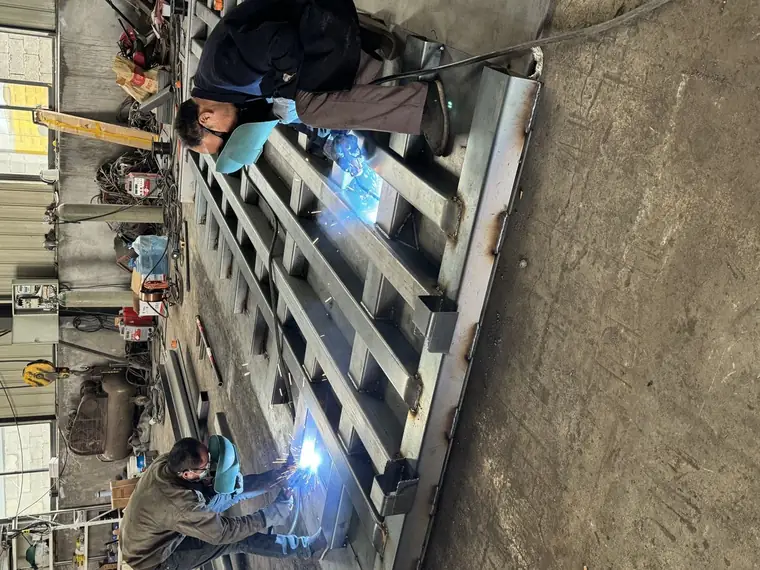
You receive a photo and video record of each stage. If you cannot travel to China, that record is your inspection — insist on it, and insist on seeing the truck running, not just parked.
Shipping to Ghana and Nigeria
We quote FOB Qingdao by default, and can arrange CIF to Tema, Takoradi or Lagos if you prefer a single price to your port. Trucks normally ship as break-bulk or roll-on/roll-off depending on the vessel schedule; container loading is possible for smaller units but adds handling cost.
Transit time varies with carrier and season — typically in the region of 30 to 40 days from Qingdao to Lagos or Tema. Treat that as an indicative planning figure and confirm the actual sailing with the forwarder at booking, because schedules change.
Documents you should receive
- Commercial invoice and packing list
- Bill of lading (original or telex release, as agreed)
- Certificate of origin
- Export licence and customs declaration copies
- Inspection record and photo/video file of the unit
Five checks before you pay a deposit
1. Ask for the engine number and a video of it running. A compression test video with the gauge visible tells you more than ten photos of a clean cab.
2. Confirm the tipper body steel thickness in millimetres. Thin bodies bulge within a year on rock work. Ask, and put the number in the PI.
3. Confirm the year on the export documents. The year that matters at customs is the one printed on the invoice and certificate of origin, so make sure it matches what you were quoted.
4. Confirm the drive side. Ghana and Nigeria run left-hand drive. Kenya, Tanzania, Uganda, Zambia, Zimbabwe and South Africa run right-hand drive. Ordering the wrong side is an expensive mistake that cannot be fixed at the port.
5. Check who prepares the export documents. If the seller cannot export in their own name, your clearance will stall. We export under Shandong Jupeng Import & Export Co., Ltd. and handle the paperwork ourselves.
How to get a price
Prices move with unit condition, body size, engine option and shipping season, so we quote per unit rather than publishing a list price that would be wrong next week. Send us your country, port, body size, horsepower and quantity on WhatsApp and you will get a specification sheet with a firm FOB or CIF figure.
Need a HOWO tipper quoted for your port?
Send your country, port and body size — we reply with spec sheet, photos and price.
Chat on WhatsApp